


Knee pain has a way of making itself the center of your world. It's there when you get out of bed in the morning, when you climb the stairs at work, and when you try to keep up with your kids or grandkids on the weekend. And the longer it goes unaddressed, the more it starts to quietly rewrite what you're willing to try, and what you've quietly given up on. For residents of Royal Oak and the surrounding Metro Detroit communities, access to advanced orthopedic knee care has never been better. Here's what sets subspecialty knee care apart, and why it matters for you.
The Complexity of the Knee Demands Specialized Expertise
The knee is the largest and one of the most mechanically complex joints in the human body. It bears the full weight of your upper body with every step, absorbs impact during physical activity, and relies on an intricate network of cartilage, ligaments, tendons, and bone to function properly. When something goes wrong, whether gradually through wear and tear or suddenly through injury, the knee rarely sends simple, easy-to-read signals.
Knee pain can originate from osteoarthritis, meniscus tears, ligament damage, patellar tracking problems, bursitis, tendinitis, or early cartilage degeneration, and several of these conditions can coexist or mimic one another. A general evaluation may identify that your knee hurts. A fellowship-trained knee specialist identifies exactly why, and that distinction changes everything about what comes next.
Why Patients Seek Specialized Knee Care
Patients who seek out a knee specialist in Royal Oak aren't always looking for surgery. In fact, most aren't. What they're looking for is clarity, a clear diagnosis and a care plan they can trust. Several consistent themes emerge among patients who choose subspecialty knee care.
They've Had Pain That Hasn't Resolved on Its Own
For many patients, the decision to see a specialist comes after weeks or months of hoping the pain would simply go away. Rest, ice packs, over-the-counter medications, they tried everything within reach. When the pain persists, or keeps coming back, it becomes clear that something more targeted is needed.
Persistent knee pain is your body's way of communicating that the underlying issue hasn't been resolved. A specialist is equipped to hear that message clearly and respond to it effectively.
They Want Answers, Not Just Pain Management
There's an important difference between managing symptoms and treating the source. Patients who choose a knee specialist are often those who want to understand what's actually wrong with their knee, not just get a prescription to take the edge off. That desire for a real diagnosis and a real plan is one of the most common reasons patients seek subspecialty care.
They're Concerned About Their Long-Term Joint Health
Knee conditions don't always stay static. Osteoarthritis progresses. A small meniscus tear that's left alone can become a larger, more complicated one. A gait change caused by knee pain gradually shifts stress to the hip, lower back, and ankle, creating a cascade of secondary problems over time.
Patients who are thinking ahead, who want to protect their joint health for the next 10, 20, or 30 years, understand that early, targeted intervention is far more effective than waiting until the situation becomes severe.
They're Active and Want to Stay That Way
Royal Oak is a community full of people who run, cycle, golf, play recreational sports, and stay physically engaged well into their 60s, 70s, and beyond. For these patients, the goal isn't just pain relief, it's a return to activity. That requires a specialist who understands the demands of an active lifestyle and can tailor a treatment plan accordingly.
The Full Spectrum of Knee Care: From Conservative to Advanced Surgical
One of the defining features of subspecialty knee care is the full range of treatment options available under one roof. A fellowship-trained knee surgeon isn't limited to a single tool. They bring the entire spectrum of knee care to every patient encounter and the clinical judgment to know which approach is right for which patient.
Non-Surgical Treatment Options
Surgery is never the starting point. For most patients, conservative treatment is highly effective. The goal is always to achieve the best possible outcome with the least invasive intervention.
Physical Therapy is frequently the cornerstone of non-surgical knee care. A personalized, structured program addresses the specific mechanics that are contributing to your pain, strengthening the muscles that support the knee, improving alignment, restoring range of motion, and building the functional stability that protects the joint during activity. For a wide range of conditions, from early arthritis to ligament sprains to patellar tracking issues, a well-designed physical therapy program can produce lasting, meaningful improvement.
Corticosteroid Injections provide targeted, fast-acting relief from pain and inflammation. They are particularly effective for patients experiencing significant swelling, bursitis, or arthritis-related flare-ups that are interfering with daily activity or making physical therapy difficult to engage with. While they are not a permanent solution, they are a highly practical tool for managing symptoms while the underlying condition is addressed.
Viscosupplementation (Hyaluronic Acid Injections) replenish the natural lubricating fluid in the knee joint, reducing friction and discomfort, especially valuable for patients whose cartilage has begun to thin due to arthritis or age-related wear. This treatment can provide relief for six months to a year or longer, giving active patients a viable path to staying mobile without surgery.
Activity Modification and Bracing give the knee the environment it needs to heal. This isn't about stopping activity altogether, it's about being strategic. A specialist helps you identify what's aggravating the joint and how to stay active at a level that supports recovery rather than working against it. A supportive brace can reduce strain on specific structures while normal function is restored.
When Advanced Surgical Care Is the Right Answer
There are patients for whom conservative treatment, as thorough as it may be, is no longer sufficient. Advanced joint degeneration, structural damage that cannot heal on its own, or pain that has become severely and persistently life-limiting may all indicate that surgery offers the clearest path to meaningful, lasting recovery.
When that threshold is reached, the quality and precision of surgical care becomes critically important. This is where fellowship training and advanced surgical technology make a measurable difference.
Minimally Invasive Knee Replacement uses techniques designed to minimize disruption to the surrounding soft tissue, reducing post-operative pain, speeding recovery, and getting patients back to their lives more quickly than traditional open approaches.
MAKO Robotic-Assisted Knee Replacement represents the current leading edge of surgical precision in joint replacement. The MAKO system uses advanced 3D imaging to build a fully personalized surgical plan before the procedure begins that is based entirely on your anatomy, not on a generalized template. During surgery, it provides real-time guidance that allows for implant placement and alignment that would be extraordinarily difficult to achieve manually.
The clinical significance of that precision is real. Better implant alignment means a more natural-feeling knee, improved range of motion, reduced long-term wear on the implant, and better durability over time.
Fellowship Training: Why It Changes the Standard of Care
Not every orthopedic surgeon is a knee specialist. Orthopedic surgery encompasses a broad range of conditions and body regions, and a general orthopedist has training across all of them. A fellowship-trained knee surgeon, by contrast, has completed an additional year of advanced subspecialty training after residency, training focused exclusively on knee reconstruction, the latest implant systems, minimally invasive techniques, and the nuances of managing complex joint disease.
That additional depth of expertise translates directly into the quality of care patients receive: more precise diagnosis, a broader range of treatment options, greater surgical skill, and a more refined ability to match the right treatment to the right patient at the right time.
When you're making decisions about the health of a joint you rely on every single day, that level of specialization matters.
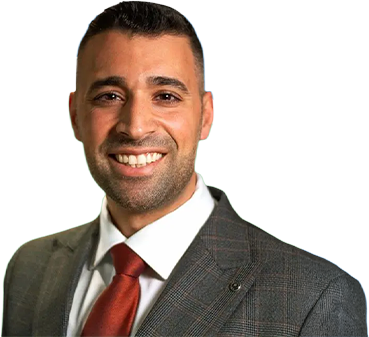
Why Patients Choose Dr. Sobh in Royal Oak
Subspecialty expertise. Dr. Sobh's fellowship training in adult reconstructive orthopedic surgery at Rush University Medical Center, one of the most respected orthopedic programs in the country, gives him a depth of knee-specific expertise that directly benefits every patient he sees.
A conservative, patient-first philosophy. Every treatment plan begins with the least invasive option appropriate for the diagnosis. Surgery is recommended only when it is genuinely the best path forward, and when it is, it's performed with the highest level of precision and care.
Advanced surgical technology. Dr. Sobh performs robotic-assisted knee replacement using the MAKO system, bringing the most current and evidence-supported surgical technology to his Royal Oak patients.
Genuine personal attention. Dr. Sobh's approach is simple: treat every patient the way he would treat his own family. That means listening carefully, taking time to explain, and designing care plans that fit real lives.
Knee Care FAQs
Q: How do I know if my knee pain requires a specialist rather than general care?
A: If your knee pain has persisted for more than a few weeks, is interfering with daily activities or sleep, involves swelling, instability, or a catching or locking sensation, or hasn't improved with rest and over-the-counter treatment, a fellowship-trained knee specialist is the right next step. Subspecialty evaluation gives you the most accurate diagnosis and the broadest range of treatment options.
Q: Does seeing a knee surgeon mean I'll end up having surgery?
A: Not at all. The majority of Dr. Sobh's patients are treated successfully with non-surgical approaches, including physical therapy, targeted injections, and activity modification. Surgery is considered only when conservative treatment has been thoroughly explored and the specific condition warrants it.
Q: What conditions can be treated without surgery?
A: Many of the most common knee conditions respond well to conservative care, including mild to moderate osteoarthritis, ligament sprains, minor meniscus tears, patellar tendinitis, IT band syndrome, bursitis, and patellofemoral pain syndrome. An accurate diagnosis is essential to knowing which approach is right for your situation.
Q: What is MAKO robotic-assisted knee replacement, and is it right for me?
A: The MAKO system uses 3D imaging to create a personalized surgical plan based on your unique anatomy before the procedure begins. During surgery, it provides real-time guidance for precise implant placement, resulting in better alignment, a more natural joint feel, and improved long-term outcomes. Whether it's appropriate for you depends on your specific diagnosis, which Dr. Sobh will evaluate thoroughly before making any recommendation.
Q: How long does recovery from knee replacement typically take?
A: Most patients are up and walking with assistance very shortly after surgery. Many return to light daily activities within a few weeks, with full recovery, including a return to exercise and more demanding activities, typically taking 3 to 6 months. Dr. Sobh and his team will provide a detailed, individualized recovery plan based on your procedure and personal goals.
Q: What should I bring to my first appointment?
A: Bring your driver's license, insurance information, and any imaging you've already had done (X-rays, MRI). It's also helpful to come prepared with a clear description of your symptoms, when the pain started, what makes it better or worse, and how it's affecting your daily life.
Take the First Step Toward Lasting Relief
You don't have to keep adjusting your life around your knee pain. With the right specialist and the right care plan, meaningful, lasting improvement is not just possible, it's the expected outcome.
Call (833) 667-3627 to schedule your consultation today.
About Dr. Ali H. Sobh, M.D. Dr. Sobh is a board-certified, fellowship-trained orthopedic surgeon specializing in minimally invasive hip and knee replacement, serving patients in Southfield, Royal Oak, Troy, and Detroit, Michigan. He completed his fellowship training in adult reconstructive orthopedic surgery at Rush University Medical Center and earned his medical degree from Wayne State University School of Medicine with high honors. Dr. Sobh is dedicated to delivering world-class orthopedic care with a personal, family-centered approach.
Disclaimer
The information provided on this page is intended for educational purposes only and should not be considered medical advice. Always seek the guidance of a qualified physician regarding any medical condition or treatment.